National Vaccine Certificate App
Digital Public Health
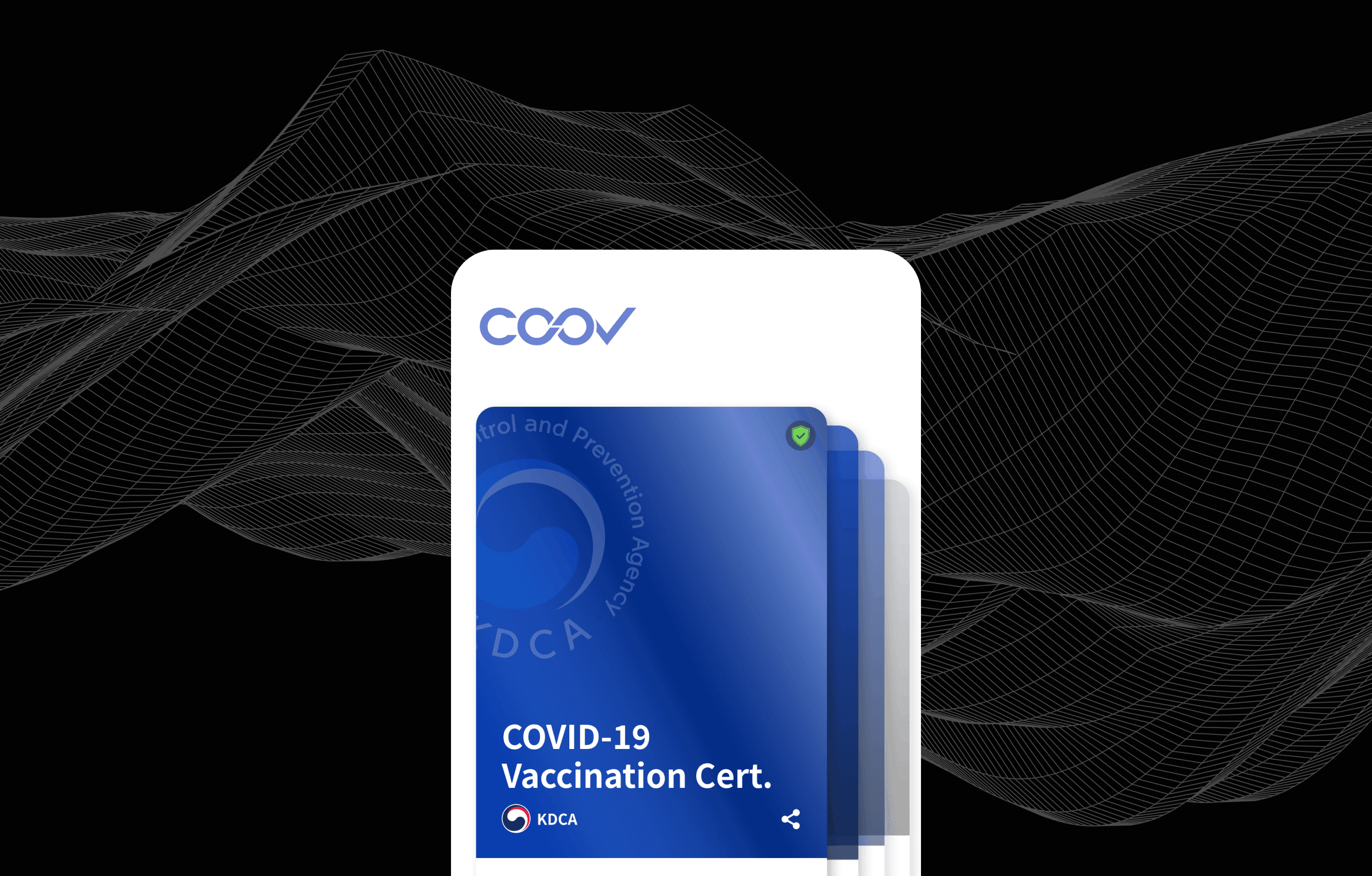
COOV eliminates the need for paper medical documents by enabling 42 million users to carry a secure, wallet like digital certificate. The credential is generated through identity authentication and automatically linked to verified vaccination data from the Korea Disease Control and Prevention Agency (KDCA). My designs launched in Q2 2021 on the Google Play Store and Apple App Store, resulting in 2 million downloads in Q3 2021, 10 million daily active users and approximately 35 million total downloads by Q1 2023. COOV recognized the iF Design Awards for Service Design and was awarded the Grand Prize (Presidential Award) at the Excellent Cases of Government Innovation.
Client
KDCA, Blockchain Labs
Services
UX & UI Design
Industries
Digital Public Health
Date
2021-2023

My Entry into the Project
The project began when three Silicon Valley based founders observed early COVID vaccination rollouts in the U.S., where paper vaccination cards were issued at scale. Anticipating that Korea would soon face the same need, they built an initial demo and proactively proposed it to the government. After being selected through a competitive process against major enterprises, the project moved into full scale development and began assembling a core product team.
I joined the team shortly after receiving the Presidential Award at the Government24 national service design competition, led by Korea’s Ministry of the Interior and Safety. My experience designing government scale UX systems directly aligned with the project’s requirements, and I was brought on as the UX/UI Designer to lead the end-to-end design of what became COOV.
My Role - UXUI Designer
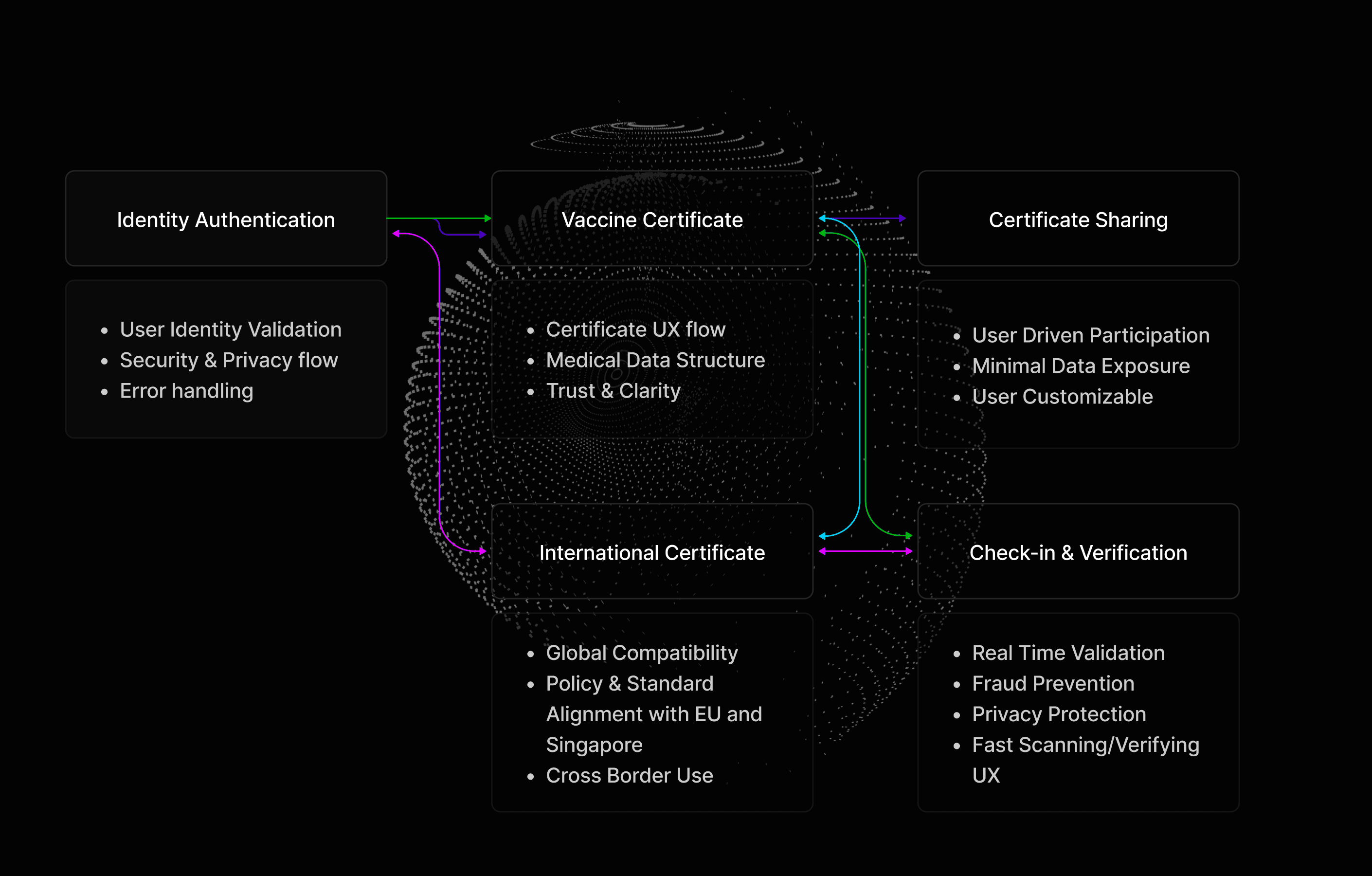
As the UX/UI Designer for COOV, I designed and launched COOV’s new features: ‘Vaccine Certificates & User flows’, ‘Certificate Check-in & Verify’, ‘Identity Authentication flow’, ‘International Use & Verification’ and ‘Certificate sharing flow’. As the sole designer working alongside a Tech lead and 6 engineers, I managed project delivery and user design.
Challenge
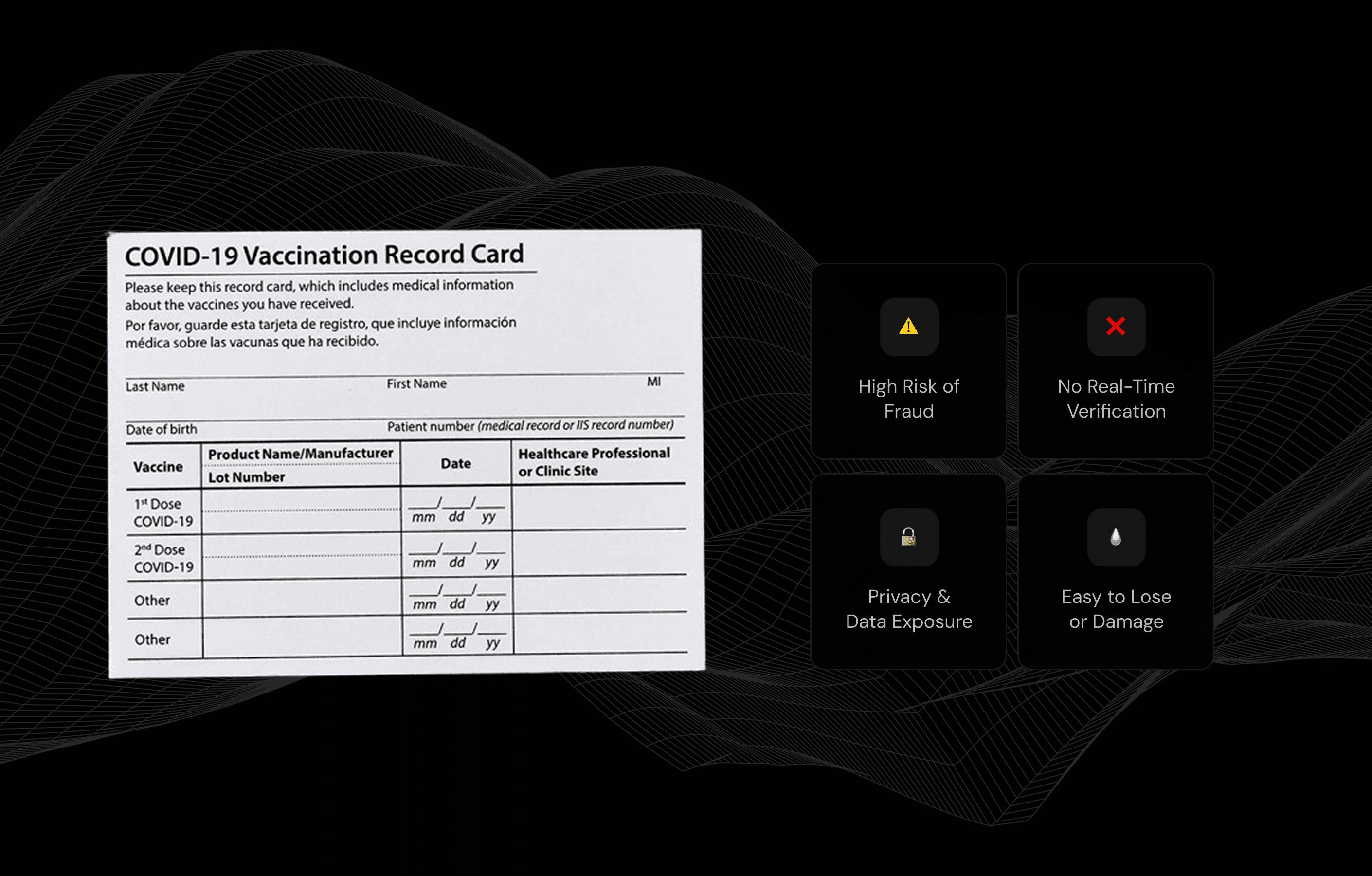
During the onset of the COVID-19 pandemic, the problem with physical paper vaccination cards was that they were fragile and posed significant privacy risks. If lost or exposed, sensitive personal health data could be easily compromised. I need to find a way to tracking people's path and contacts with others to save lives, needs product that protect citizen's personal data, medical data but government able to tracking it down.
Process
During the design process, I designed end-to-end flows and iteratively refined the product through using insights from user interviews, user research, usability feedback and stakeholder input, delivering final design updates and new feature specifications to engineering partners each sprint. I applied a unified design process across the COOV app, allowing multiple features to evolve coherently within a single product ecosystem.
Constraints Became Inputs to the Design
I approached government policies and institutional demands as core inputs to the design process and reflected them across the UX architecture. Instead of accommodating every exception, I intentionally simplified the core user flow and narrowed the scope where necessary. Certain features were intentionally deferred or excluded, allowing the product to respond more swiftly and reliably to evolving external conditions.
Unified Design Process
At COOV, rather than treating each feature as a separate project, I applied a unified design process that allowed multiple functionalities to scale consistently within a single product. As an app for issuing medical information, I used the UX flow of issuing the core vaccination certificate digital card as a baseline and extended the same UX structure to other issuance functions such as international certificates and identity verification certificates.
Design Framework
I grounded every design decision in a structured framework balancing accuracy vs. usability, and security vs. accessibility based on context and use case. I treated each trade off as a design constraint to be mapped, distinguishing where precision was mandatory and where usability could be optimized without compromising trust.
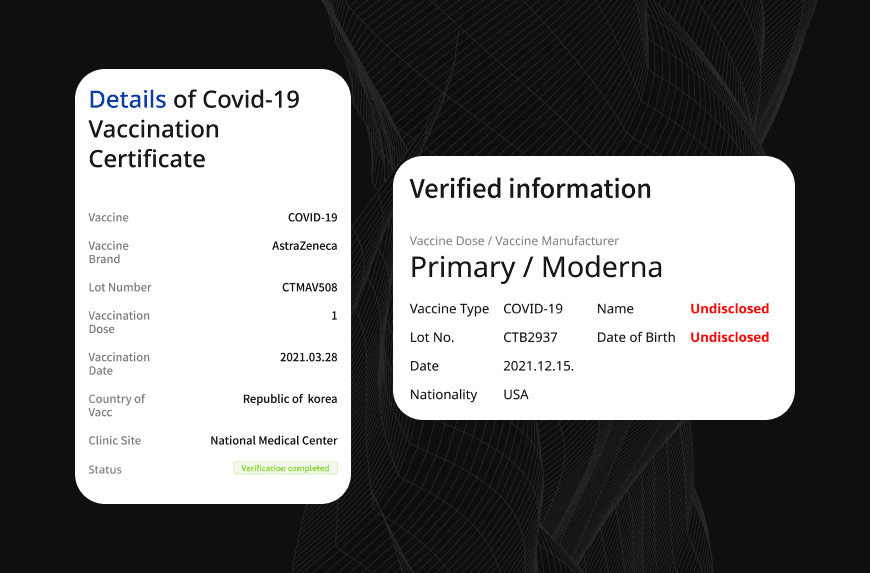
Accuracy Over Usability
I retained KCDC’s official medical codes in the vaccination UI, prioritizing accuracy over usability to minimize risk of misinterpretation across national and medical contexts. (KDCA: Korea Center for Disease Control)
Accessibility Over Security
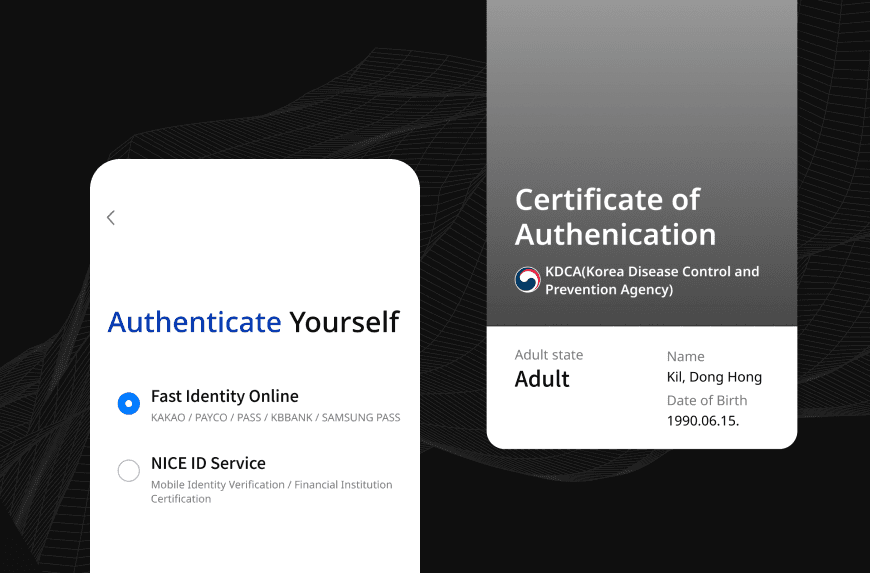
Adoption hinged on ease of access, especially for elderly and digitally vulnerable users. I designed a mobile phone based authentication flow in place of complex financial certificate logins. While this introduced minor security trade offs, the decision improved customer support report rates by 27% among users aged 60 and above.
Decision Within Constraints
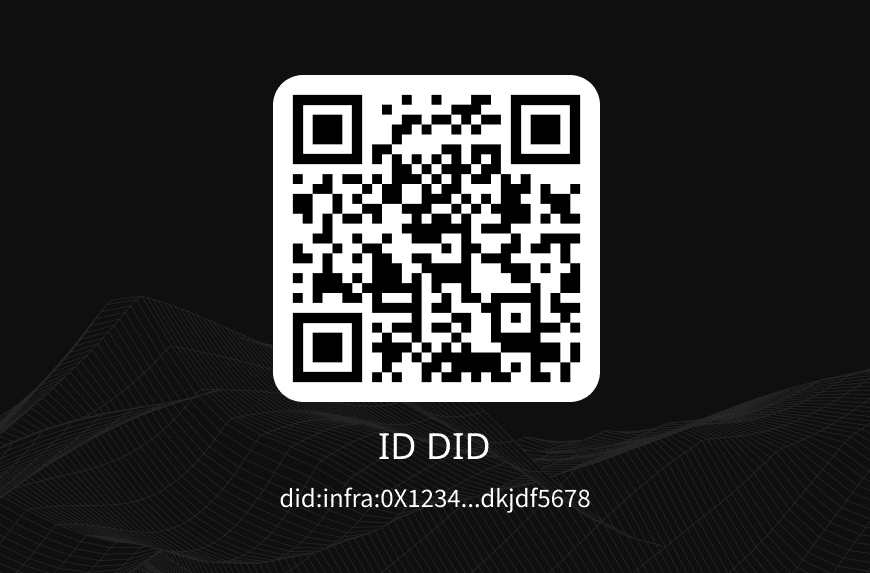
The QR based vaccination certificate issuance and verification flow was prioritized as a government mandate. I reinforced this decision by implementing a decentralized blockchain (DID) architecture. This approach enabled verifiable trust without relying on a central server, which was critical for high volume, real time verification.
Why This Feature Came First
The QR based vaccination certificate issuance and verification flow was prioritized as a government mandate. I reinforced this decision by implementing a decentralized blockchain (DID) architecture. This approach enabled verifiable trust without relying on a central server, which was critical for high volume, real time verification.
Defining Scope Through Constraint
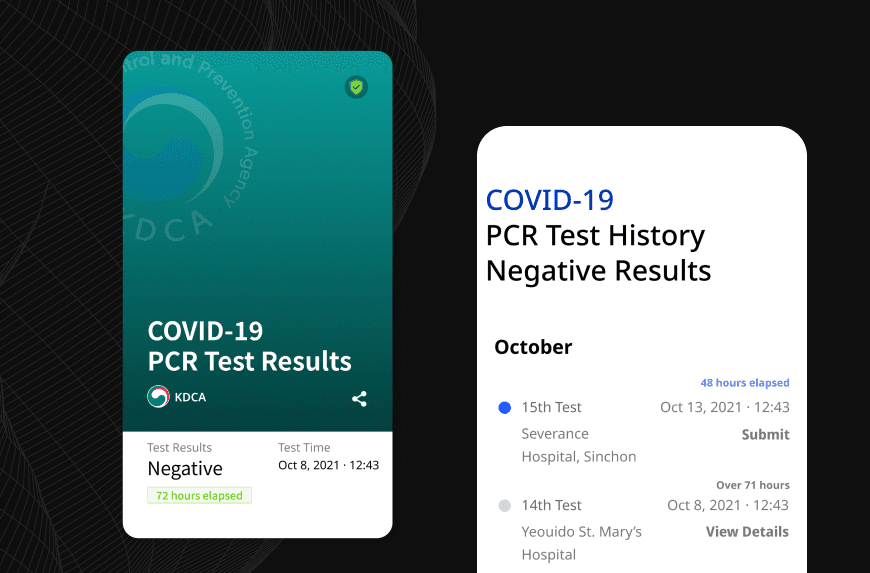
Even with a fully designed PCR (polymerase chain reaction) test verification certificate, I deliberately held it back from final release. User research and usage patterns showed that introducing multiple certificate types would increase cognitive load, especially for users accessing the app an average of 5–10 times per day. Reducing scope was a deliberate decision to preserve clarity in high frequency, time sensitive use.
Design Principles
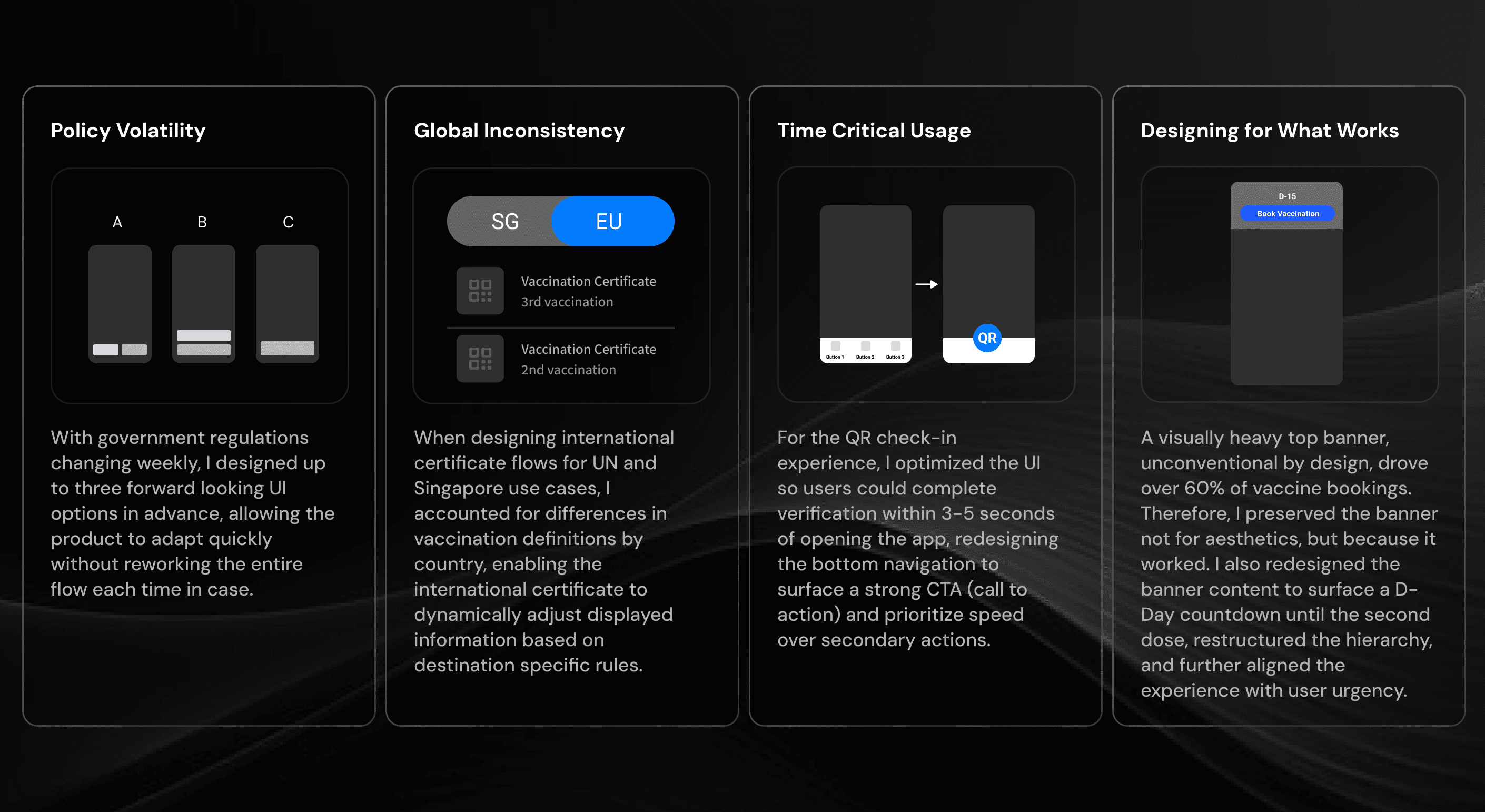
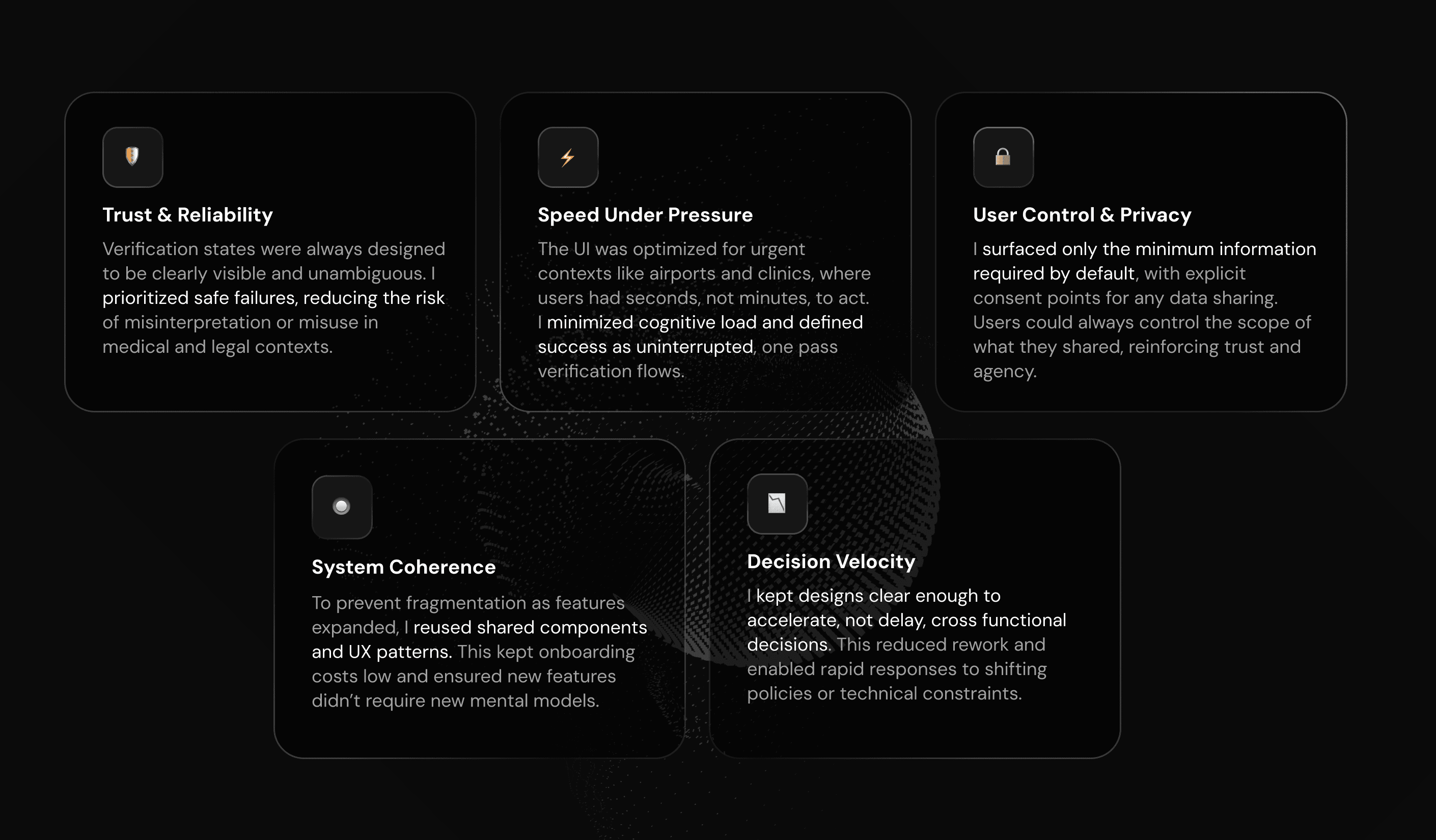
I defined and operationalized a set of five UX principles that guided decisions across high stakes, fast changing environments like airports, hospitals, and government systems. These principles ensured COOV remained coherent, resilient, and easy to use even as policies shifted weekly and new features were added rapidly.
Design System
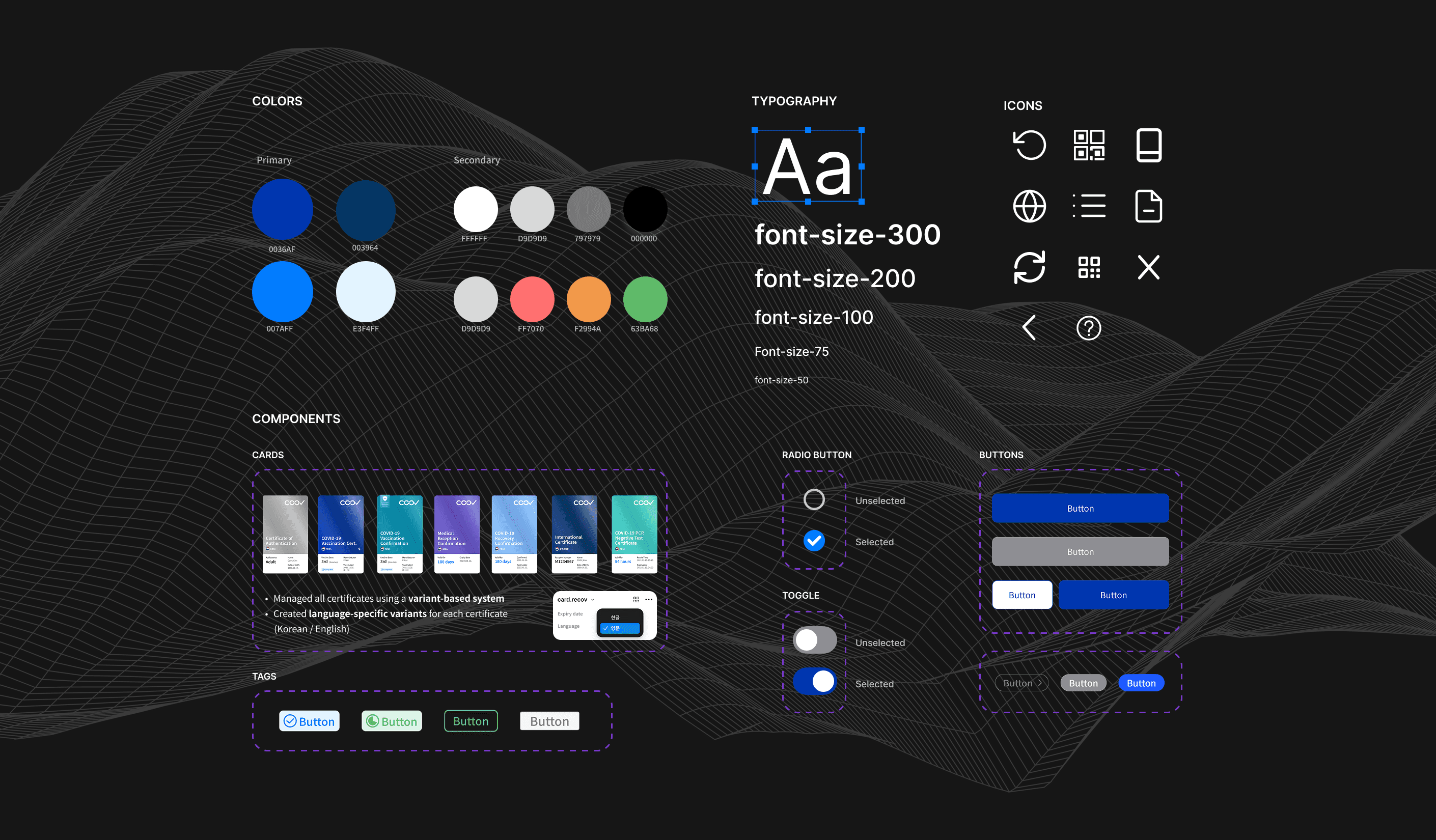
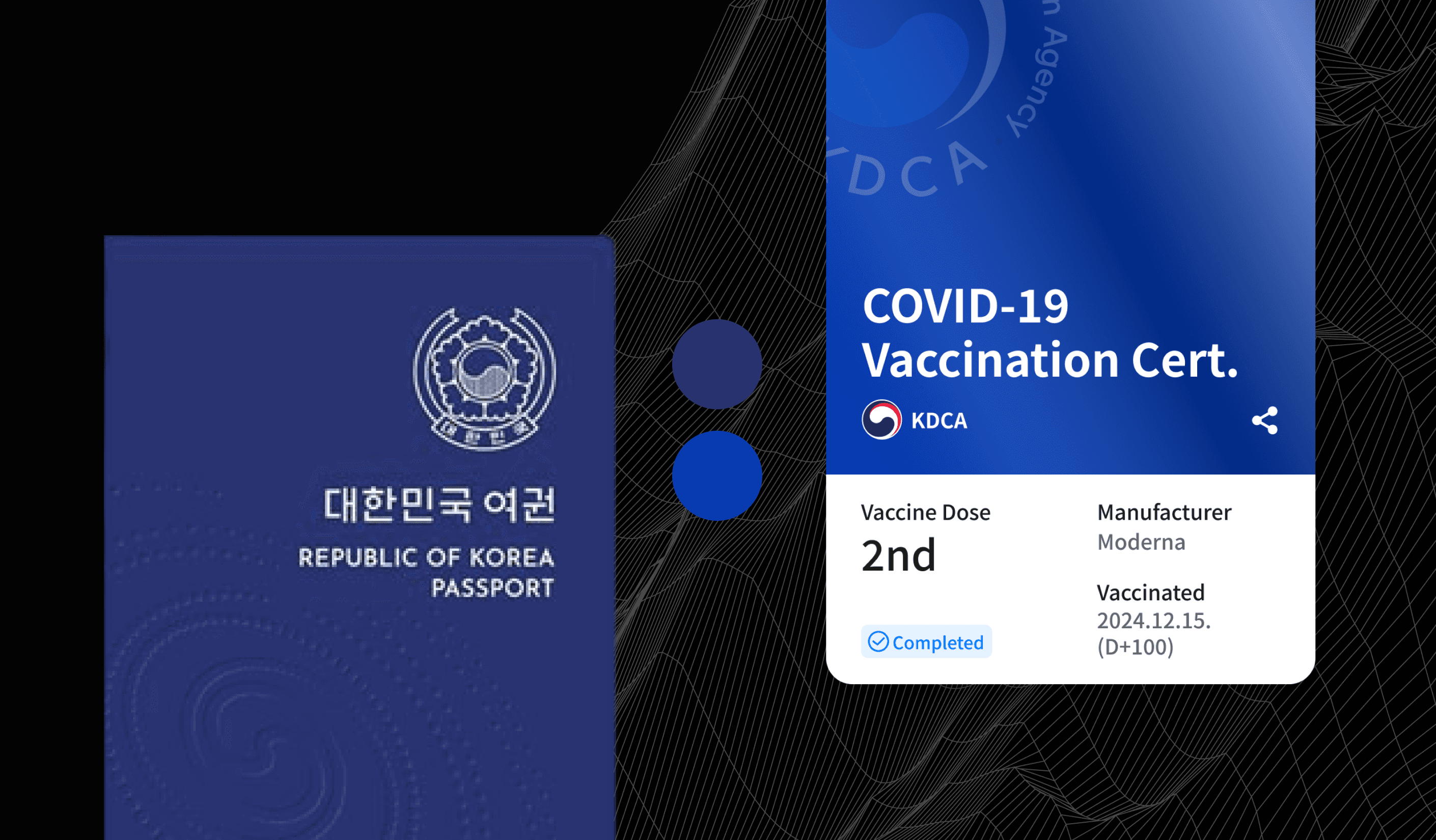
The design color system was inspired by the Korean passport, a visual symbol of national identity and trust. By referencing a familiar and authoritative artifact, the UI helped citizens intuitively recognize the certificate as an official and reliable vaccination credential.
Features
Vaccine Certificate & User Flows
Vaccine Certificates & User Flows enable users to issue vaccination certificates within the app and present them for verification. I standardized specific vaccination rules and individual vaccination statuses into a single card based credential system. Users can select which information is included in the QR code generated from their vaccination certificate and view detailed vaccination records within the certificate interface.
International Use & Verification
“International Use & Verification” enables users to prove their vaccination status internationally when traveling abroad. The feature uses a passport aligned international certificate format with built in protection against tampering. Once identity verification is completed, passport information is securely linked from the Ministry of Foreign Affairs, allowing the international certificate to be generated automatically. I also designed a dedicated verification flow for airport quarantine officers, enabling them to quickly review vaccination details and determine quarantine exemption eligibility at a glance.
Global Airport Officer Mode
In addition to the public facing COOV app, I designed an internal verification mode for airport and quarantine officers. Access was limited to authorized officials, ensuring operational security while supporting real world airport verification workflows. It supports QR based credential scanning, standardized validation logic, and clear verification outcomes in high traffic airport environments.
Officer Mode Access & Verification Flows
Official only access with restricted permissions
Instant QR scanning optimized for high-volume checkpoints
Clear pass / fail status with no interpretation required
Minimal data exposure to protect traveler privacy
Consistent verification rules across regions and authorities
Identity Authentication
“Identity Authentication Flow” uses mobile phone verification to establish user identity and link it to a blockchain based ID, forming a trusted foundation for credential issuance. I designed the authentication CTA to create a clear and trustworthy entry point, and led collaboration with telecom and platform partners to enable the identity verification flow.
Certification Check-in & Verification
I designed a QR based check-in service to replace handwritten visitor logs used at restaurants, cafés, hospitals, and other public venues. Previously, users had to repeatedly write their name, partial address, and phone number multiple times a day, which caused delays and friction at entry points. By introducing a unified QR check-in flow, the entry time was reduced from approximately 10X faster, 45 seconds to 3 seconds per visit, improving efficiency, usability, and consistency across locations. Also implemented selective data sharing controls and a QR based verification flow with 30 second code refresh for improved privacy and security.
Impact
Enabled 1M+ real time verifications per day without central server dependency by implementing a decentralized DID architecture that balanced privacy with reliability.
Increased elderly user verification success rate by 27% through mobile first authentication choosing accessibility over stricter financial certificate standards.
Cut policy response time from 10-14 days to 1day by embedding a weekly Notion based ops cadence that synced design, engineering, and ministry teams.
Retained 60%+ user engagement on the vaccine booking banner in favor of conversion optimized clarity, confirmed via A/B test.
South Korea’s COVID-19 response balanced public health effectiveness with strong privacy protection. This system enabled rapid contact notifications without exposing identities, contributing to one of the lowest COVID-19 mortality impacts globally.[Graph below,COVID-19 Impact on Life Expectancy by Country: South Korea shows one of the lowest life year losses among peer nations.
Reflection
What I'm Most Proud Of
In a high stakes, high velocity environment like COOV, I wasn’t just pushing pixels. I was helping define how trust, health, and clarity would be communicated to tens of millions. What I’m most proud of was that I was able to earning trust in a moment that truly mattered. And yet, what stays with me most is people. The late night Slack threads, the tough trade off calls, the shared sense of purpose. The work was complex, but the alignment we built made it possible. I didn’t just contribute to a meaningful product, I became part of a team I’d build with again in a heartbeat.
How It Shaped My UX Philosophy
Working in a policy driven domain taught me that empathy isn’t just about users, it’s also about understanding process, regulation, and systemic constraints. For me, empathy now includes institutional empathy designing solutions that work for people, organizations, and governance systems alike. In future work, I will prioritize empathy for context as much as empathy for users.